

New Poll: Voters Want Congress to Focus on Costs; Not Interfere with the Tools They Rely on to Save Money and Time
TechNet today released a poll that found that there was little appetite for Congress to interfere with the services that Americans rely on for convenience and to save money. Overwhelmingly, voters preferred that Congress focus on economic concerns, rather than regulate the way existing online services work.

Small Businesses Are Embracing a Broad Range of E-Commerce Marketplaces and AI Tools to Expand Reach and Improve Performance
TechNet today released the results of a recent poll conducted with Morning Consult.

TechNet Launches Innovation Research Center
TechNet launched the Innovation Research Center, a new initiative to provide trusted, timely data and analysis to inform policymaking at the federal and state levels.

New Poll: Large Bipartisan Majority of Americans (75%) Want a Single National AI Development Policy
TechNet today announced the results of a new poll showing that a bipartisan majority of voters prefer a single national AI development policy.

New Poll: 76% of Voters Prefer a Single National AI Development Policy
TechNet today announced the results of a new poll showing that a bipartisan majority of voters prefer a single national AI development policy.
New Poll: TechNet and Echelon Insights Survey Reveals Americans See Tech as Key to U.S. Global Competitiveness, Oppose Breaking up American Tech Companies
TechNet released the results of a survey revealing most Americans believe that breaking up U.S. tech companies will put the United States at a competitive disadvantage against our adversaries like China, raise costs for consumers, make America less secure, and slow American innovation.
New Study Finds Hawaiʻi Tourism Could Drop 25% if Short-term Rentals are Phased Out
TechNet released results of a new survey of travelers that finds people are less likely to travel to Hawaiʻi when informed about proposed legislation to prohibit short-term rentals in Hawaiʻi.
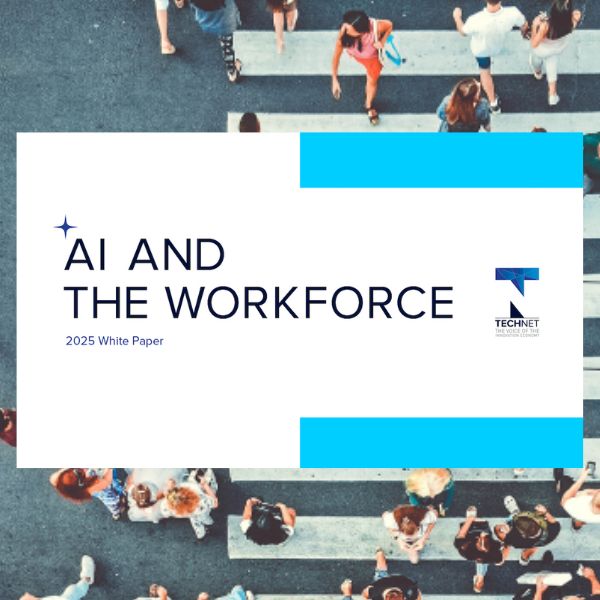
TechNet Releases “AI and the Workforce”
TechNet released a new white paper, “AI and the Workforce.” The report examines how AI can transform the workforce for the better and outlines a roadmap for policymakers and business leaders to integrate AI into the workplace responsibly.

TechNet Study Reveals Valuable Role of E-Commerce Marketplaces in Supporting Small Businesses
TechNet announced the results of a new poll conducted with Ipsos.

New Findings: Most Americans Aligned on AI’s Positive Impact on the World
TechNet announced the results of a new poll conducted with Morning Consult. The survey looked at attitudes across a wide range of AI-related issues, including national security, healthcare, problem-solving, and everyday applications.
New Poll Highlights Web Developer Concerns about Potential Changes to the App Ecosystem
TechNet announced the results of a new poll conducted with Morning Consult.